
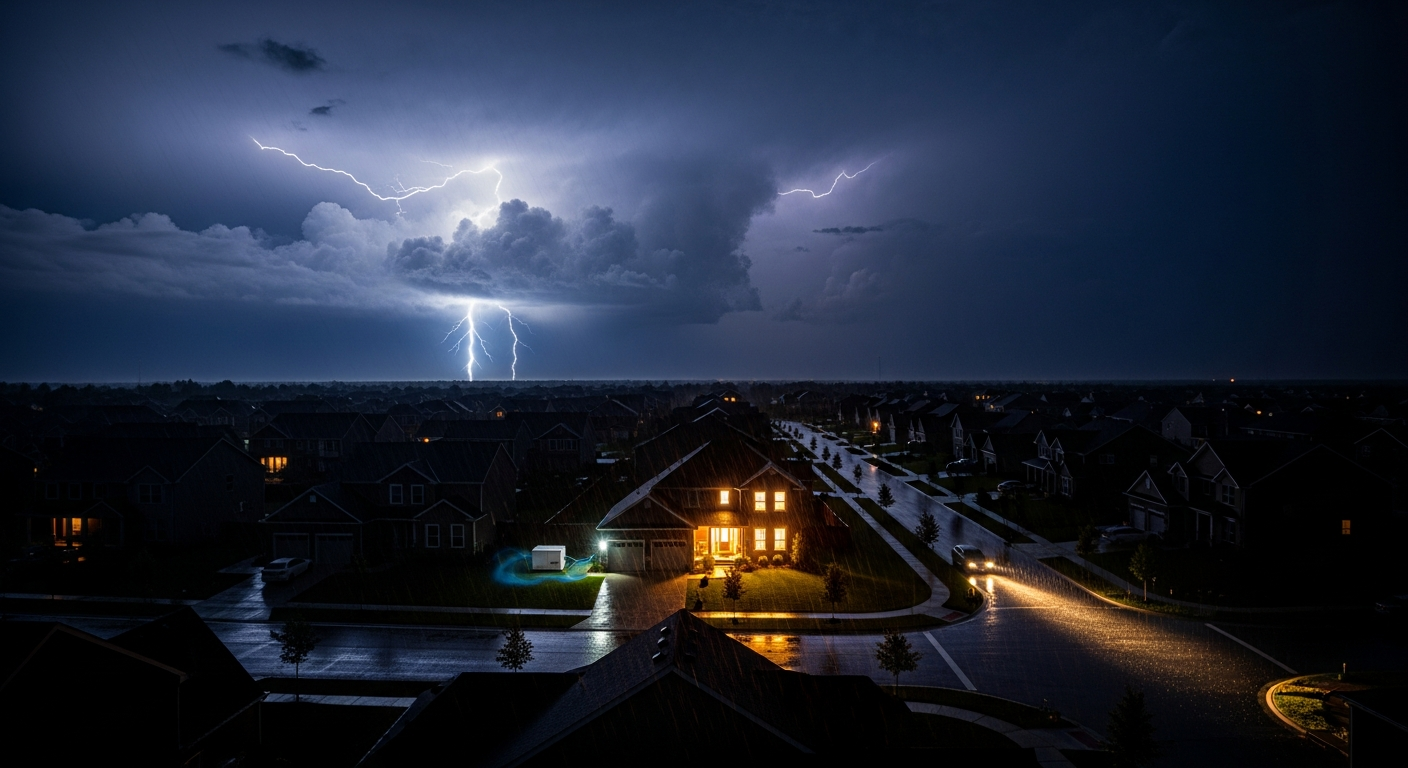
When the Lights Go Out: Why Whole-Home Generators Matter More Than Ever
It's 3 a.m. during a thunderstorm. The power cuts. Your house goes dark. Within minutes, the thermostat stops working. Your refrigerator full of groceries sits silent. If anyone in your home relies on medical devices, that anxiety hits differently. You grab your phone and realize you have maybe 12 hours before the battery dies. For most American homeowners, this isn't a hypothetical it's increasingly likely.
According to the U.S. Energy Information Administration, U.S. electricity customers experienced an average of 11 hours of interruptions in 2024, compared to a decade-long average of about 5.5 hours. That's a dramatic shift, and severe weather is the culprit: 83% of power outages are weather-related, with hurricanes alone accounting for 80% of all outage hours in 2024.
The Hidden Costs of Going Without
When the power fails, costs pile up fast. Spoiled food. Hotels or generator rentals. Missed work for remote employees. Stress on families with medical equipment dependencies. Heating and cooling failures that damage your home or create safety risks. Add up a multi-day outage and you're looking at $1,000–$3,000 in unexpected expenses not counting the stress.
That's why homeowners in storm-prone areas are increasingly investing in backup power. The numbers tell the story: a standby generator typically adds 3% to 5% to a home's resale value. On a $400,000 home, that's $12,000 to $20,000 in added equity. Better yet, the ROI can reach up to 150% of your installation cost, making a $15,000 generator installation worth $20,000+ in added value in high-risk markets.
Interestingly, the market response to outage risk is direct: homes in areas prone to frequent outages see the strongest buyer interest in backup power systems, particularly in hurricane corridors like Florida and the Gulf Coast.
"On a $400,000 home, a standby generator can add $12,000 to $20,000 in equity with ROI reaching up to 150% of installation cost."
Choosing the Right System
Most whole-home generators are fueled by natural gas, propane, or diesel, and automatically kick in within seconds of a power loss you don't have to do anything. Installation typically runs $6,000 to $15,000 depending on capacity and fuel type. Natural gas systems offer convenience (no fuel storage needed), while propane systems work in areas without gas lines. Both provide the peace of mind that your home's essential systems HVAC, refrigeration, lighting, medical devices stay online.
Key Facts at a Glance
- →Average U.S. outage duration rose to 11 hours in 2024 up from a 5.5-hour decade average
- →83% of all power outages are weather-related
- →A multi-day outage can cost $1,000–$3,000 in food, lodging, and lost productivity
- →Standby generators add 3–5% to home resale value
- →Installation costs range from $6,000 to $15,000
The Bottom Line
Power outages are no longer rare inconveniences they're a growing reality. In 2024, regional impacts were severe: South Carolina customers endured nearly 53 hours of outages during Hurricane Helene, while Hawaii averaged 4.4 outages annually. When your home faces 1–2 outages per year on average, a backup generator shifts from luxury to practical investment.
The financial case is sound. The peace-of-mind case is even stronger. If you're in a storm-prone area or work from home, a whole-home generator isn't a "nice to have" it's insurance for the life you've built.
Ready to protect your home?
GridGuard is Kansas City's premier KOHLER® whole home generator installer. Get a free, no-pressure estimate today.